Artist Bio
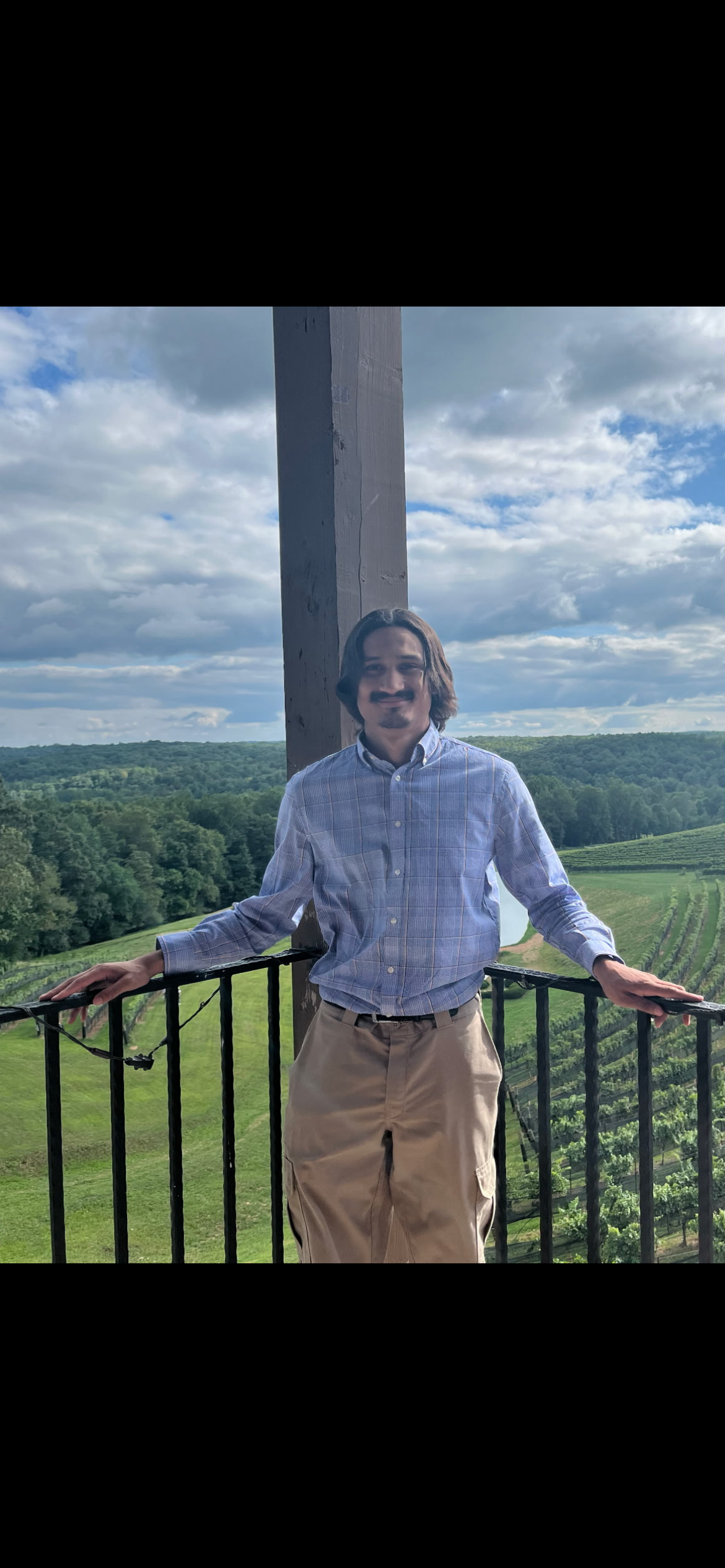
Jason Sepulveda was born and raised in the Atlanta, Georgia area and was introduced to art from an early age via his mother. Jason began drawing and painting as a child and was introduced to ceramics as a high school sophomore. Thanks to the dedication of his instructor, he decided to pick up pottery as his main craft and has since participated in numerous markets and gallery exhibitions, such as the Swan Coach House Summer Invitational in Spring of 2023, the Autumn Exhibit at Suwannee Arts Center in fall of 2025, and the Strictly Functional Pottery National, also in fall of 2025, as well as taking classes at local art studios and has taught the occasional workshop, one of which involved demonstrating how to create lidded vessels at the John’s Creek Arts Center.
His passion for history, specializing in Medieval European, Imperial Chinese, and Colonial Latin American history, has been a key influence in the work he makes in functional porcelain and earthenware. Beyond creating functional and decorative ceramics alike, Jason’s other passions lie in the realm of glaze chemistry and formulation, and kiln technology, to revive age-old pottery traditions and bring them to the modern day, and this all ties back into his shared love of both art and history.
Artist Statement
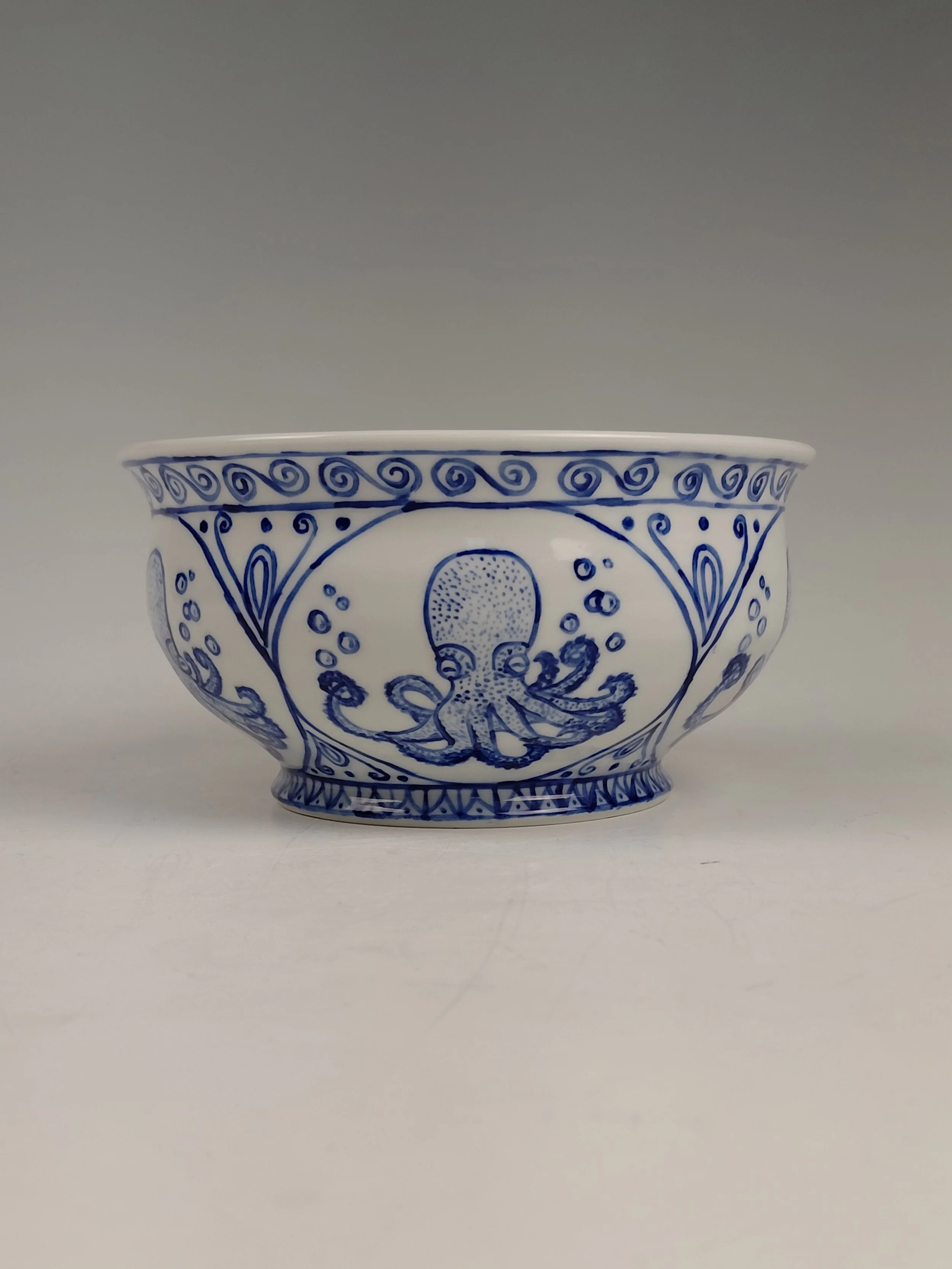
I primarily create functional work out of porcelain and terracotta. I make vessels with the express purpose of bridging art and utility. This includes dinner sets, plant pots, and incense burners, a wide range of work that fits in every corner of one’s home. My works often incorporate reconstructed glaze recipes from ancient times.
I use the potter’s wheel as my main method of making pottery; however, I have worked over time to incorporate more hand-building techniques to achieve a broader field of finished pieces, such as rectangular sushi sets. I determine what style fits a piece best when decorating and glazing. For those I decide to paint with underglazes, I use the bare clay as my canvas and often think of designs in the moment. Each of these designs is hand-painted over a rough sketch. When I decide to let the glaze itself do the work, I typically use a glaze based on reconstructed chemistries of long-lost recipes, such as the world-famous iron blues and greens achieved by the Chinese a millennium ago. The majority of my work is fired in gas-powered kilns, which yield vibrant hues that are addictive to look at.
I have chosen to embark on this path of ceramics because I find genuine fulfilment in connecting with the artistic and technical traditions that have long preceded us. I aim to preserve these traditions while also seamlessly incorporating modern elements, such as the motifs reflected in my body of work. I also want to build a bridge with an audience who appreciates history, nature, and emotional themes, such as the relaxing natures of the soft blues and greens that I admire so much. I also developed my current style from old Chinese and Japanese ceramic relics collected by my artist mother, which I saw as a toddler and took an interest in even back then. These have deeply imprinted themselves on my psyche, and my goal is to have this occur with those who view the things I create today.